Paris Universal Exposition - 1867
Polychrome enamelled earthenware
Destroyed
© National Archives
_
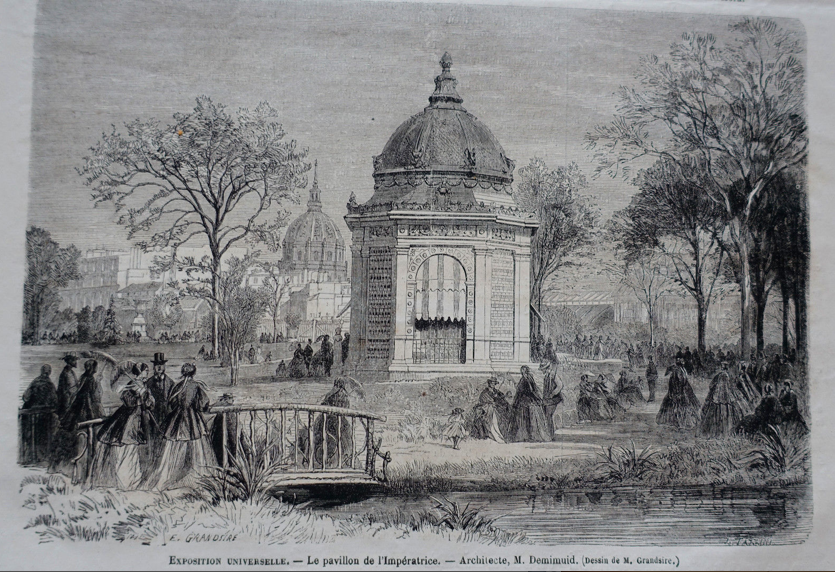
Pavilion, known as the Empress's Pavilion, built for the 1867 Paris Universal Exposition, in the reserved park developed on the Champ-de-Mars. This collective project brought together several artists and craftsmen, including Auguste Jean, who was responsible for the execution of the exterior friezes, tympana, and medallions in enamelled earthenware.
Conceived on the initiative of upholsterer Henri Penon and architect Demimuid, the pavilion was built in honor of Empress Eugénie with the ambition of bringing together, within a single edifice, the productions of various entrepreneurs and artists. A second pavilion, intended for the Emperor, mirrored it in the grand park.
Octagonal in plan and accessed by three steps, the pavilion was set within a vast landscaped garden punctuated by paths, streams, valleys, and artificial hills. Its interior, decorated in the Neo-Louis XVI style, consisted of a single salon lit by four windows and topped with a dome. Although several photographs and lithographs now allow its architecture to be reconstructed, they unfortunately do not convey the polychromy provided by Auguste Jean's earthenware decorations. The contemporary press, which described the building as a "marvel of taste, grace, and elegance," nevertheless attests to the favorable reception it received.
This achievement also testifies to the revival of polychromy in architecture during the Second Empire, particularly fostered by the renewed interest in enamelled earthenware and its use as an integral element of architectural decoration.